
Most people beginning a GLP-1 wellness program spend considerable energy thinking about what to eat, how often to move, and how to navigate the clinical side of their treatment. Very few spend any time thinking about the physical environment in which that eating actually happens — and yet the layout, contents, and tools of a kitchen may be one of the …
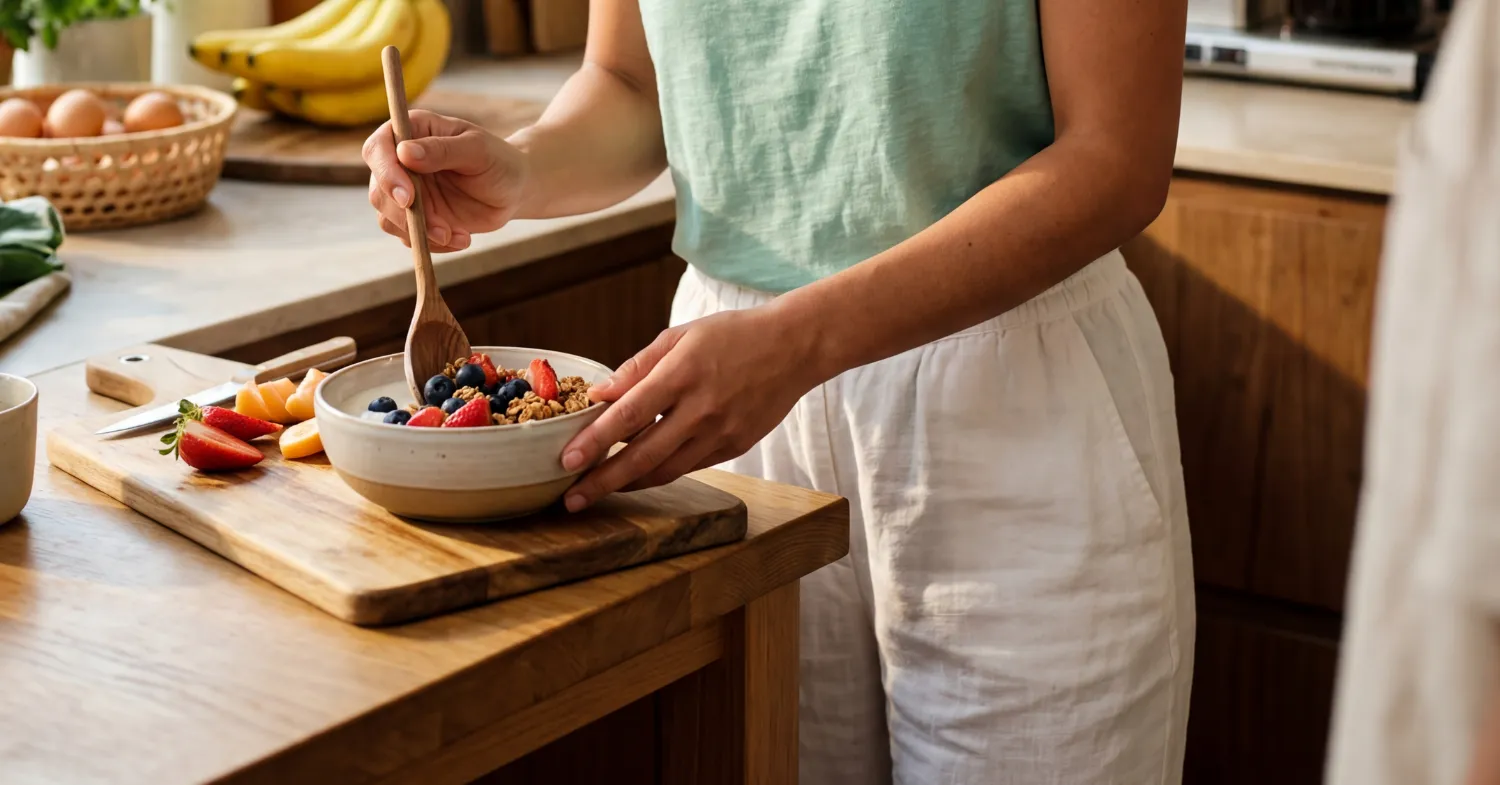
Most people beginning a GLP-1 wellness program spend considerable energy thinking about what to eat, how often to move, and how to navigate the clinical side of their treatment. Very few spend any time thinking about the physical environment in which that eating actually happens — and yet the layout, contents, and tools of a kitchen may be one of the most underestimated variables in whether any nutrition plan succeeds or fails over time.
Healthy cooking is not simply a matter of willpower or nutritional knowledge. It is a behavioral outcome that is deeply shaped by friction. When the environment makes healthy choices easier than unhealthy ones, people make more healthy choices — not because they are more disciplined, but because the path of least resistance has been thoughtfully redesigned. For anyone on a GLP-1 program, building a kitchen that supports the therapy’s goals is not a soft lifestyle suggestion — it is one of the most practical and evidence-backed things a person can do to protect and extend the results the medication is working to create.
This guide explores the science, the specific tools, and the direct connection between how your kitchen is equipped and how well your wellness journey unfolds.
Why Your Kitchen Setup Is a GLP-1 Variable
GLP-1 therapy creates a powerful physiological shift — reducing appetite, quieting the constant mental noise around food, slowing gastric emptying, and stabilizing blood sugar in ways that make conscious, nourishing food choices dramatically easier than they were before treatment. This is a genuine and meaningful clinical advantage. But what a person does with that advantage depends heavily on what happens when they walk into their kitchen.
A kitchen stocked with processed, calorie-dense foods, lacking in meal prep infrastructure, and designed around convenience rather than nourishment will pull behavior in one direction — even when appetite is reduced and intentions are strong. A kitchen equipped with the right tools, organized to reduce friction, and stocked to support quality protein, fiber, and whole-food preparation will pull behavior in exactly the direction that GLP-1 therapy is trying to reinforce.
The concept of environmental design for health behavior is well-established in behavioral science. Research published in the International Journal of Behavioral Nutrition and Physical Activity found that the home food environment — including food availability, preparation tools, and kitchen organization — was a significant and independent predictor of dietary quality and eating behavior. What surrounds you shapes what you do, often more powerfully than conscious intention alone. For a full overview of how lifestyle and environmental factors compound alongside clinical treatment, the MD Meds Resources page offers free, evidence-based guides covering every dimension of sustainable wellness.
The Science Connecting Home Cooking to Better Health Outcomes
The evidence supporting home cooking as a health-promoting behavior is extensive and consistent across populations, age groups, and health conditions. People who cook at home more frequently consume fewer calories, less sodium, less saturated fat, and more fiber and micronutrients than those who rely primarily on restaurant or processed food — and these differences persist even when income, education, and baseline health status are controlled for.
A study published in Public Health Nutrition found that people who cooked dinner at home more than five times per week consumed significantly higher-quality diets and were 24% less likely to have excess body fat compared to those who cooked less than three times per week — even after adjusting for demographic factors. The mechanism is not complicated: when you control the cooking process, you control what goes into your food. Portion sizes, fat content, sodium levels, protein density — all of these are substantially more favorable when meals are prepared at home.
At the neurological and behavioral level, research published in Appetite found that the act of cooking itself — the engagement with food preparation, the sensory process of creating a meal — is associated with increased mindful eating and greater satisfaction with smaller portions. This finding is particularly relevant for those on a GLP-1 program, because GLP-1 therapy already supports satiety with smaller volumes of food. Cooking at home amplifies that effect by encouraging slower, more attentive eating and a more engaged relationship with the food itself. The MD Meds blog explores the full evidence base for the lifestyle habits that make clinical treatment most effective over time.
How the Wrong Kitchen Environment Quietly Undermines GLP-1 Progress
One of the most consistent findings in behavioral nutrition research is that the effort required to prepare a meal directly predicts whether that meal gets prepared at all. When cooking is inconvenient — when the right tools are missing, when prep takes too long, when cleanup feels disproportionate to the effort — people default to whatever is fastest. For most people in most households, what is fastest is rarely what is most nourishing.
This matters in the context of GLP-1 therapy for a specific reason: the medication reduces appetite and food preoccupation, but it does not eliminate the gravitational pull of convenience. If the path of least resistance in a kitchen leads toward ultra-processed food, then reduced appetite may simply mean eating smaller amounts of less nourishing food — and the full metabolic and health benefits of the therapy will be underutilized. Research published in the British Medical Journal found that higher consumption of ultra-processed foods was independently associated with increased all-cause mortality, cardiovascular disease risk, and weight gain — even when overall caloric intake was similar to lower-processed diets. The quality of what is eaten matters independently of the quantity.
Inadequate kitchen infrastructure also affects meal consistency, which is one of the key behavioral factors associated with long-term weight management success. Without tools that make batch cooking, portion control, and quick assembly viable, healthy eating becomes a high-effort, time-intensive activity rather than a sustainable daily practice. For those pursuing broader wellness goals through services on the MD Meds wellness page, building the environmental scaffolding that supports daily nourishing meals is among the highest-leverage lifestyle investments available.
How the Right Tools Amplify What GLP-1 Therapy Is Already Doing
GLP-1 therapy works by mimicking a naturally occurring hormone that regulates appetite, slows digestion, and fundamentally changes the physiological experience of eating. People on GLP-1 programs consistently report that the mental space previously occupied by food cravings, constant hunger, and food-related anxiety becomes available for new patterns — new habits around how they eat, what they choose, and how they relate to nourishment. This is the window in which lasting behavioral change becomes genuinely possible.
The right kitchen tools protect and expand that window. When meal preparation is fast, satisfying, and produces food that supports the therapy’s goals — high protein, adequate fiber, balanced macronutrients, appropriate portion sizes — every meal reinforces the new relationship with food that GLP-1 treatment is helping to establish. Research published in Obesity Reviews found that structured meal preparation, supported by planning and environmental modification, was associated with significantly greater adherence to dietary patterns and superior weight management outcomes over follow-up periods of one year and beyond. The tools do not replace clinical treatment — they create the daily conditions in which that treatment can deliver its full effect.
A study published in the Journal of the Academy of Nutrition and Dietetics found that adults who used portion control tools and structured meal prep strategies lost significantly more weight and maintained losses more effectively than those relying on unstructured dietary change alone. For those on a GLP-1 weight loss program, these tools are not accessories — they are functional components of a comprehensive approach. The MD Meds FAQ page addresses common questions about what holistic lifestyle support looks like alongside GLP-1 treatment.
7 Kitchen Tools That Make Healthy Cooking Genuinely Easier
1. A Digital Food Scale: The Precision Tool That Eliminates Guesswork
On a GLP-1 program, protein intake matters more than ever — and eyeballing portions consistently produces large errors. A food scale removes the guesswork entirely in under a minute. Research in the Journal of the Academy of Nutrition and Dietetics found that portion tracking was one of the strongest behavioral predictors of successful weight management, independent of dietary approach. For those also exploring NAD+ therapy or Sermorelin, precise nutrition tracking supports the energy and hormonal optimization those therapies are designed to deliver.
2. A High-Speed Blender: Protein and Nutrient Density Without the Effort
Meeting protein targets on reduced food volume is one of the most consistent challenges on a GLP-1 program. A high-speed blender solves this with minimal effort — high-protein smoothies, smooth soups, and easy-to-digest sauces that are especially valuable during the early phase of treatment when appetite and tolerance for complex meals are lower. Research on post-bariatric dietary patterns consistently identifies soft, nutrient-dense foods as essential during periods of significantly reduced eating volume.
3. A Steamer Basket or Electric Food Steamer: The Most Nutrient-Preserving Cooking Method Available
Steaming preserves the broadest range of vitamins and minerals, requires zero added fat, and produces food that is easy to digest — a quality that pairs especially well with the slower gastric emptying that GLP-1 therapy produces. Research in the Journal of Food Science confirmed that steaming retains significantly more vitamin C, folate, and antioxidants than boiling or microwaving. A basic steamer basket costs under fifteen dollars and works in any pot you already own.
4. Glass Meal Prep Containers: The Infrastructure of Consistent Nourishment
Meal consistency is one of the behavioral factors most strongly associated with long-term weight management success. A set of glass meal prep containers makes it operationally simple — one cooking session supports several days of quick, high-quality meals with minimal daily effort. Research in the International Journal of Behavioral Nutrition and Physical Activity found that meal planning was associated with healthier diets and lower rates of overweight across a sample of over 40,000 adults. For those on a GLP-1 weight loss program, this single habit removes the daily friction that most commonly derails dietary consistency.
5. A Cast Iron Skillet or Nonstick Ceramic Pan: The Protein Cooking Tool That Does the Heavy Lifting
A reliable pan makes high-protein cooking fast, easy, and repeatable — the foundation of the dietary approach that GLP-1 therapy is designed to support. Chicken, fish, eggs, and lean ground meat all cook quickly with minimal added fat when the pan is right. Research in the American Journal of Clinical Nutrition consistently supports higher protein intake as protective of lean muscle mass during caloric restriction — making what you cook as important as how much you eat.
6. A Digital Instant-Read Thermometer: The Tool That Makes Protein Cooking Foolproof
Uncertainty about doneness is one of the most common reasons people avoid cooking protein at home — a barrier that matters more when GLP-1 therapy has already reduced overall eating volume and every meal counts. An instant-read thermometer delivers an accurate reading in seconds and eliminates that uncertainty entirely. The USDA confirms that a thermometer is the only reliable method for ensuring protein is safely cooked — visual cues and timing alone are not sufficient.
7. A Quality Chef’s Knife and Cutting Board: The Foundation Everything Else Depends On
No kitchen setup functions well without a sharp knife and a stable cutting board. Dull, inadequate cutting tools are one of the most consistent friction points that push people toward processed convenience foods instead of whole food preparation. Research on food preparation barriers identifies perceived cooking effort as a primary driver of that pattern. A well-sharpened knife makes vegetable and protein prep fast enough to be a genuine daily habit rather than a chore — and for anyone on a GLP-1 program, it is the most foundational investment in a kitchen built for lasting results. The MD Meds blog covers the practical daily habits that turn clinical progress into permanent change.
How to Set Up a GLP-1-Friendly Kitchen That Actually Works
The most effective kitchen for a GLP-1 program is not the most elaborate or most expensive one — it is the one organized around minimum friction and maximum support for the specific nutritional priorities that make GLP-1 treatment most effective. Protein adequacy, fiber intake, portion awareness, and meal consistency are the behavioral targets; the kitchen environment should be designed to make all four as easy as possible.
Make nourishing food the most visible and accessible option. The behavioral science of food choice is clear: what is most visible and most accessible is most frequently chosen. Prepped vegetables at eye level in the refrigerator, portioned protein ready to assemble, whole fruit on the counter — these placements are not trivial. Research from Cornell University’s Food and Brand Lab found that the visibility and placement of food in the home environment was among the strongest predictors of what people ate, independent of their stated dietary intentions.
Batch cook one to two times per week. The most time-efficient and behaviorally effective home cooking strategy for those on a GLP-1 weight loss program is preparation batching — cooking large quantities of protein, grains, and roasted or steamed vegetables once or twice per week and storing them in meal prep containers for quick assembly throughout the week. This approach reduces daily cooking time to five to ten minutes of assembly while ensuring that a nutritionally complete, high-quality meal is always available without real-time effort.
Design for cleanup ease, not just cooking ease. One of the most underappreciated barriers to consistent home cooking is the perceived cleanup burden. Choosing tools that are dishwasher-safe, limiting the number of pans used in a single meal, and keeping the kitchen organized enough that cleanup is fast directly reduces the friction that causes people to avoid cooking in the first place. For personalized guidance on how lifestyle environment design and clinical support work together, the MD Meds About Us page describes the full scope of what physician-led, individualized care looks like in practice.
Common Mistakes That Make Healthy Cooking Harder Than It Needs to Be
Equipping the kitchen all at once instead of starting with the highest-impact tools is one of the most common and most counterproductive approaches to building a healthy cooking environment. Purchasing every possible gadget simultaneously creates clutter, reduces counter space, and generates setup overwhelm that paradoxically makes cooking feel less accessible rather than more. The approach supported by behavioral research is to start with the two or three tools that address the most frequent friction points — typically a food scale, a reliable cooking pan, and a meal prep container set — and add further tools as each becomes genuinely used and the habit of cooking solidifies.
Assuming that healthy cooking must be time-consuming is a misconception that causes more people to abandon the effort than almost any other. Research published in Nutrition Journal found that the perceived time cost of healthy cooking was the most frequently cited barrier to home food preparation. A chicken breast, a steamed vegetable, and a portion of whole grain can be prepared in under twenty minutes with the right tools and a minimal prep approach.
Neglecting protein-forward tools in favor of specialty equipment is a prioritization error that leaves the most critical nutritional variable — protein adequacy during GLP-1-supported weight loss — without the practical infrastructure it requires. Before investing in a spiralizer, a specialty bakeware set, or a countertop appliance for a single use case, equipping the kitchen with the tools that make daily protein cooking fast and reliable delivers substantially greater return on investment. For a broader view of how nutritional priorities and clinical treatment intersect in sustainable wellness, the MD Meds Resources page provides the evidence-based tools to support every dimension of the journey.
Frequently Asked Questions About Cooking and GLP-1 Programs
Does what I cook at home actually affect my GLP-1 results? Significantly. GLP-1 therapy creates the physiological conditions for sustainable dietary change by reducing appetite and food noise — but the quality, composition, and consistency of what is eaten within those conditions directly shapes outcomes. Home-cooked meals prepared with whole foods, adequate protein, and sufficient fiber consistently outperform convenience and restaurant food across every relevant nutritional variable. The MD Meds FAQ page explores how dietary habits and clinical treatment intersect during a GLP-1 program.
How much protein should I be eating on a GLP-1 program, and why does it matter? Protein needs during GLP-1-supported weight loss are higher than many people assume — typically in the range of 1.2 to 1.6 grams per kilogram of body weight daily — because preserving lean muscle mass during caloric restriction requires adequate protein intake even when overall food volume is reduced. A digital food scale and reliable cooking tools make hitting these targets consistently achievable. Research published in Obesity Reviews confirms that structured dietary approaches including meal planning and preparation are strongly associated with greater lean mass preservation during weight loss programs.
What if I have very little time to cook? Can I still support my GLP-1 program at home? Yes — and the tools in this guide are specifically chosen because they minimize time while maximizing nutritional quality. A food scale adds thirty seconds to meal assembly. A steamer basket requires zero active cooking time once vegetables are inside. A set of meal prep containers means that a single cooking session on Sunday supports five to seven days of quick, consistent meals. For anyone beginning or continuing a GLP-1 weight loss program, the perceived time barrier to healthy home cooking is consistently larger than the actual time required when the right infrastructure is in place.
Are there specific foods I should prioritize cooking at home on a GLP-1 program? Lean proteins (chicken, fish, eggs, legumes, Greek yogurt), non-starchy vegetables (leafy greens, broccoli, zucchini, cauliflower), whole grains (oats, quinoa, brown rice in appropriate portions), and healthy fats (avocado, olive oil, nuts in measured quantities) form the nutritional foundation that GLP-1 therapy supports most effectively. All are most economical, most nutritionally intact, and most controllable when prepared at home with basic equipment.
Where can I learn more about building a complete lifestyle alongside GLP-1 therapy? The MD Meds GLP-1 page is the best starting point for understanding how personalized GLP-1 therapy works and what lifestyle habits amplify results over time. The Resources page offers free downloadable guides, and the About Us page explains the physician-led, personalized approach that MD Meds brings to every patient’s wellness journey.
Final Thoughts: Your Kitchen Is Part of Your Treatment Plan
The wellness conversation has spent decades focused on what people should eat and what medications or treatments they should pursue. Far less attention has been paid to the environment in which eating actually happens — and yet that environment is one of the most powerful determinants of whether any clinical program delivers its full potential.
For anyone on a personalized GLP-1 program, the therapy is creating real and meaningful physiological change — reducing appetite, quieting food noise, stabilizing blood sugar, and opening a genuine window for lasting behavioral transformation. What fills that window depends, in no small part, on what happens when you walk into your kitchen. A sharp knife, a reliable pan, a food scale, and a set of meal prep containers are not luxuries. They are the physical infrastructure through which clinical results become daily habits, and daily habits become permanent change.
The research is consistent: people who cook at home more frequently eat better, weigh less, and sustain those outcomes more effectively than those who don’t — and the tools that make cooking easier directly increase the frequency with which it happens. You do not need a professional kitchen or an elaborate setup. You need the right tools, thoughtfully chosen, in an environment designed to make nourishing choices the path of least resistance.
Ready to pair a kitchen built for success with physician-led clinical support that works at every level? Explore MD Meds and take the next step toward a healthier, more sustainable wellness journey.
This post is for informational and lifestyle purposes only and is not intended as medical advice. Always consult your healthcare provider before making changes to your treatment plan or dietary approach.
Sign up for free Session!
It’s easy and free!
Check Your Eligibility
Your kitchen is either working for your GLP-1 program or creating unnecessary resistance — and the difference often comes down to a few practical tools. The right equipment removes the daily friction that causes even the best dietary intentions to break down, turning healthy cooking from a chore into a consistent, sustainable habit. Explore our personalized GLP-1 protocols here.
Source:
Effectiveness of interventions to promote physical activity and/or decrease sedentary behaviour among rural adults: a systematic review and meta-analysis
Ultra-Processed Foods and Health Outcomes: A Narrative Review
Growth and tolerance of infants fed formula supplemented with polydextrose (PDX) and/or galactooligosaccharides (GOS): double-blind, randomized, controlled trial
Ultra-Processed Foods and Health Outcomes: A Narrative Review
Growth and tolerance of infants fed formula supplemented with polydextrose (PDX) and/or galactooligosaccharides (GOS): double-blind, randomized, controlled trial